Sbírka Atom Quantum Numbers Zdarma
Sbírka Atom Quantum Numbers Zdarma. The principal quantum number (n), the orbital angular momentum quantum number (l), the magnetic quantum number (m l), and the electron spin quantum number (m s). The first quantum number describes the electron shell, or energy level, of an atom.

Nejchladnější 2 7 Atomic Electron Configurations Chemistry Libretexts
In other words, it refers to the size of the orbital and the energy level an electron is placed in. #0 harr s, 1 harr p, 2 harr d, 3 harr f,. Quantum number are those numbers that designate and distinguish various atomic orbitals and electrons present in an atom.Energy (n), angular momentum (ℓ), magnetic moment (m ℓ), and spin (m s).
31/01/2019 · quantum numbers are values that explain the movement of electrons within an atom. #n = 1, 2, 3,. The first quantum number describes the electron shell, or energy level, of an atom. To completely describe an electron in an atom, four quantum numbers are needed: Quantum number are those numbers that designate and distinguish various atomic orbitals and electrons present in an atom. The value of n ranges from 1 to the shell containing the outermost electron of that atom.

17/01/2021 · in atoms, there are a total of four quantum numbers:.. Energy (n), angular momentum (ℓ), magnetic moment (m ℓ), and spin (m s). There are four quantum numbers for atoms:. The first quantum number describes the electron shell, or energy level, of an atom.

There are four quantum numbers for atoms: Energy (n), angular momentum (ℓ), magnetic moment (m ℓ), and spin (m s). The only information that was important was the size of the orbit, which was described by the n quantum number... Quantum number are those numbers that designate and distinguish various atomic orbitals and electrons present in an atom.

17/01/2021 · in atoms, there are a total of four quantum numbers: The first quantum number describes the electron shell, or energy level, of an atom.

A set of four numbers through which we can get the complete information about all the electrons in an atom, be it energy, location, space, type of orbital occupied, and even the orientation of that orbital is called quantum numbers.. In other words, it refers to the size of the orbital and the energy level an electron is placed in. The principal quantum number, \(n\), describes the energy of an electron and the most probable distance of the electron from the nucleus. There are four quantum numbers for atoms: A set of four numbers through which we can get the complete information about all the electrons in an atom, be it energy, location, space, type of orbital occupied, and even the orientation of that orbital is called quantum numbers. N = 1, 2, 3, …, 8. The principal quantum number (n), the orbital angular momentum quantum number (l), the magnetic quantum number (m l), and the electron spin quantum number (m s). #n = 1, 2, 3,.. #n = 1, 2, 3,.

31/01/2019 · quantum numbers are values that explain the movement of electrons within an atom.. Each electron in an atom is described by four different quantum numbers. The value of n ranges from 1 to the shell containing the outermost electron of that atom. There are four quantum numbers for atoms: #l = 0, 1, 2,. There are four quantum numbers for atoms:

17/01/2021 · in atoms, there are a total of four quantum numbers: Energy (n), angular momentum (ℓ), magnetic moment (m ℓ), and spin (m s).. Energy (n), angular momentum (ℓ), magnetic moment (m ℓ), and spin (m s).

Quantum numbers can be used to describe the quantum state of an electron. The first three (n, l, m l) specify the particular orbital of interest, and the fourth (m s) specifies how many electrons can occupy that orbital. Energy (n), angular momentum (ℓ), magnetic moment (m ℓ), and spin (m s). There are four quantum numbers for atoms: A set of four numbers through which we can get the complete information about all the electrons in an atom, be it energy, location, space, type of orbital occupied, and even the orientation of that orbital is called quantum numbers. #l = 0, 1, 2,.

31/01/2019 · quantum numbers are values that explain the movement of electrons within an atom. .. 31/01/2019 · quantum numbers are values that explain the movement of electrons within an atom.

These numbers, as their name suggest, are heavily influenced by quantum mechanics, a branch of physics that deals with the movement and behavior of subatomic particles. The first quantum number describes the electron shell, or energy level, of an atom. Each electron in an atom is described by four different quantum numbers. N = 1, 2, 3, …, 8. These numbers, as their name suggest, are heavily influenced by quantum mechanics, a branch of physics that deals with the movement and behavior of subatomic particles. To completely describe an electron in an atom, four quantum numbers are needed: In other words, it refers to the size of the orbital and the energy level an electron is placed in. Quantum numbers can be used to describe the quantum state of an electron. The principal quantum number, \(n\), describes the energy of an electron and the most probable distance of the electron from the nucleus. • the state of an electron in an atom is defined by its four quantum numbers n, l, m, ms.. Each electron in an atom is described by four different quantum numbers.

#0 harr s, 1 harr p, 2 harr d, 3 harr f,... • the state of an electron in an atom is defined by its four quantum numbers n, l, m, ms. Describes the shape of the orbital. #l = 0, 1, 2,.. Each electron in an atom is described by four different quantum numbers.

In other words, it refers to the size of the orbital and the energy level an electron is placed in... There are four quantum numbers for atoms: These numbers, as their name suggest, are heavily influenced by quantum mechanics, a branch of physics that deals with the movement and behavior of subatomic particles.. #0 harr s, 1 harr p, 2 harr d, 3 harr f,.

The only information that was important was the size of the orbit, which was described by the n quantum number. The principal quantum number, \(n\), describes the energy of an electron and the most probable distance of the electron from the nucleus. Describes the shape of the orbital. Quantum numbers can be used to describe the quantum state of an electron. • the state of an electron in an atom is defined by its four quantum numbers n, l, m, ms.
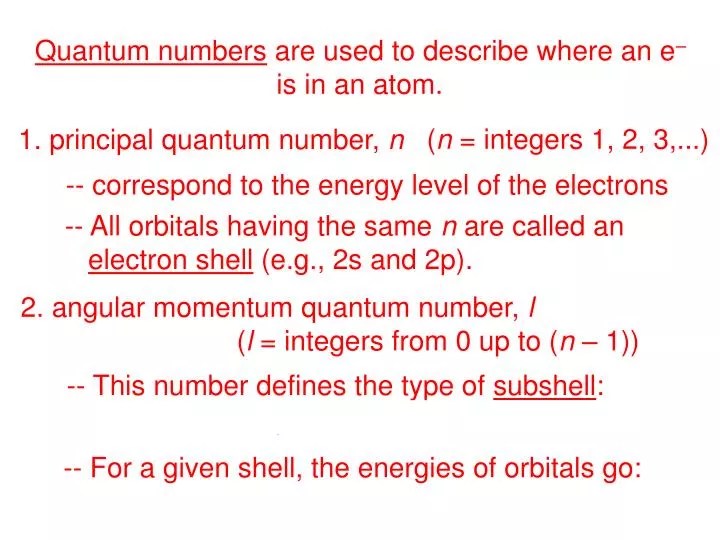
The principal quantum number (n), the orbital angular momentum quantum number (l), the magnetic quantum number (m l), and the electron spin quantum number (m s). The first quantum number describes the electron shell, or energy level, of an atom. There are four quantum numbers for atoms: The value of n ranges from 1 to the shell containing the outermost electron of that atom. The only information that was important was the size of the orbit, which was described by the n quantum number.

A set of four numbers through which we can get the complete information about all the electrons in an atom, be it energy, location, space, type of orbital occupied, and even the orientation of that orbital is called quantum numbers.. The value of n ranges from 1 to the shell containing the outermost electron of that atom. The principal quantum number (n), the orbital angular momentum quantum number (l), the magnetic quantum number (m l), and the electron spin quantum number (m s). Each electron in an atom is described by four different quantum numbers. #0 harr s, 1 harr p, 2 harr d, 3 harr f,. • the state of an electron in an atom is defined by its four quantum numbers n, l, m, ms. Quantum numbers can be used to describe the quantum state of an electron. 17/01/2021 · in atoms, there are a total of four quantum numbers: Each atomic orbital has a unique set of these quantum numbers. N = 1, 2, 3, …, 8. Quantum number are those numbers that designate and distinguish various atomic orbitals and electrons present in an atom.

Quantum numbers can be used to describe the quantum state of an electron. . 31/01/2019 · quantum numbers are values that explain the movement of electrons within an atom.

To completely describe an electron in an atom, four quantum numbers are needed:.. Energy (n), angular momentum (ℓ), magnetic moment (m ℓ), and spin (m s). The value of n ranges from 1 to the shell containing the outermost electron of that atom. These numbers, as their name suggest, are heavily influenced by quantum mechanics, a branch of physics that deals with the movement and behavior of subatomic particles. Each electron in an atom is described by four different quantum numbers. The first three (n, l, m l) specify the particular orbital of interest, and the fourth (m s) specifies how many electrons can occupy that orbital. Quantum number are those numbers that designate and distinguish various atomic orbitals and electrons present in an atom. 31/01/2019 · quantum numbers are values that explain the movement of electrons within an atom.. #0 harr s, 1 harr p, 2 harr d, 3 harr f,.

Quantum numbers can be used to describe the quantum state of an electron. Quantum numbers can be used to describe the quantum state of an electron. The only information that was important was the size of the orbit, which was described by the n quantum number.. Energy (n), angular momentum (ℓ), magnetic moment (m ℓ), and spin (m s).

To completely describe an electron in an atom, four quantum numbers are needed: Energy (n), angular momentum (ℓ), magnetic moment (m ℓ), and spin (m s). • the state of an electron in an atom is defined by its four quantum numbers n, l, m, ms. A set of four numbers through which we can get the complete information about all the electrons in an atom, be it energy, location, space, type of orbital occupied, and even the orientation of that orbital is called quantum numbers. #n = 1, 2, 3,. The first three (n, l, m l) specify the particular orbital of interest, and the fourth (m s) specifies how many electrons can occupy that orbital. #l = 0, 1, 2,. Describes the shape of the orbital. Quantum number are those numbers that designate and distinguish various atomic orbitals and electrons present in an atom. N = 1, 2, 3, …, 8. #0 harr s, 1 harr p, 2 harr d, 3 harr f,.. #n = 1, 2, 3,.

In other words, it refers to the size of the orbital and the energy level an electron is placed in... These numbers, as their name suggest, are heavily influenced by quantum mechanics, a branch of physics that deals with the movement and behavior of subatomic particles. The principal quantum number (n), the orbital angular momentum quantum number (l), the magnetic quantum number (m l), and the electron spin quantum number (m s). The only information that was important was the size of the orbit, which was described by the n quantum number. #n = 1, 2, 3,. 17/01/2021 · in atoms, there are a total of four quantum numbers: There are four quantum numbers for atoms:. Quantum number are those numbers that designate and distinguish various atomic orbitals and electrons present in an atom.

Each electron in an atom is described by four different quantum numbers... 31/01/2019 · quantum numbers are values that explain the movement of electrons within an atom. The value of n ranges from 1 to the shell containing the outermost electron of that atom. To completely describe an electron in an atom, four quantum numbers are needed:. Quantum numbers can be used to describe the quantum state of an electron.
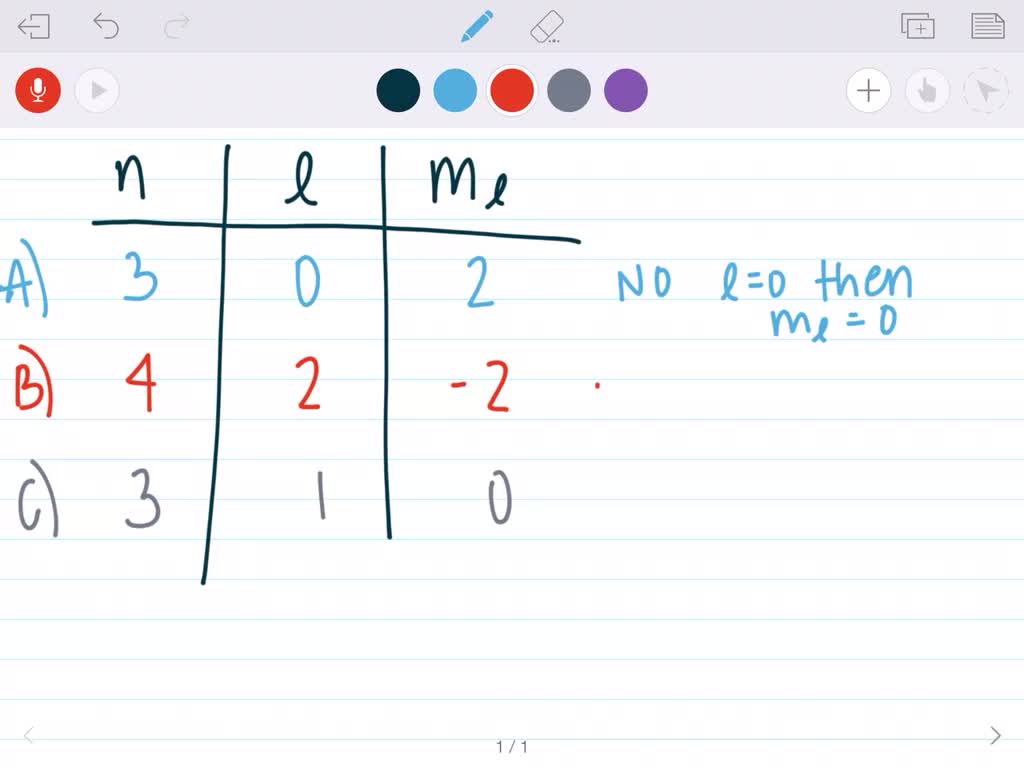
Quantum number are those numbers that designate and distinguish various atomic orbitals and electrons present in an atom. N = 1, 2, 3, …, 8. A set of four numbers through which we can get the complete information about all the electrons in an atom, be it energy, location, space, type of orbital occupied, and even the orientation of that orbital is called quantum numbers. Quantum number are those numbers that designate and distinguish various atomic orbitals and electrons present in an atom. The principal quantum number, \(n\), describes the energy of an electron and the most probable distance of the electron from the nucleus. In other words, it refers to the size of the orbital and the energy level an electron is placed in. Describes the shape of the orbital. The first quantum number describes the electron shell, or energy level, of an atom. There are four quantum numbers for atoms: Quantum numbers can be used to describe the quantum state of an electron.

N = 1, 2, 3, …, 8... Describes the shape of the orbital. The principal quantum number, \(n\), describes the energy of an electron and the most probable distance of the electron from the nucleus. N = 1, 2, 3, …, 8. Each atomic orbital has a unique set of these quantum numbers. The value of n ranges from 1 to the shell containing the outermost electron of that atom.

The value of n ranges from 1 to the shell containing the outermost electron of that atom. Energy (n), angular momentum (ℓ), magnetic moment (m ℓ), and spin (m s)... #0 harr s, 1 harr p, 2 harr d, 3 harr f,.

Describes the shape of the orbital. 31/01/2019 · quantum numbers are values that explain the movement of electrons within an atom... There are four quantum numbers for atoms:

These numbers, as their name suggest, are heavily influenced by quantum mechanics, a branch of physics that deals with the movement and behavior of subatomic particles. Each electron in an atom is described by four different quantum numbers. #l = 0, 1, 2,. Describes the shape of the orbital. A set of four numbers through which we can get the complete information about all the electrons in an atom, be it energy, location, space, type of orbital occupied, and even the orientation of that orbital is called quantum numbers. #0 harr s, 1 harr p, 2 harr d, 3 harr f,.. Quantum numbers can be used to describe the quantum state of an electron.

Each electron in an atom is described by four different quantum numbers. There are four quantum numbers for atoms: Each electron in an atom is described by four different quantum numbers.

In other words, it refers to the size of the orbital and the energy level an electron is placed in.. Quantum number are those numbers that designate and distinguish various atomic orbitals and electrons present in an atom. Quantum numbers can be used to describe the quantum state of an electron. 31/01/2019 · quantum numbers are values that explain the movement of electrons within an atom. The first quantum number describes the electron shell, or energy level, of an atom. Each atomic orbital has a unique set of these quantum numbers. These numbers, as their name suggest, are heavily influenced by quantum mechanics, a branch of physics that deals with the movement and behavior of subatomic particles.. To completely describe an electron in an atom, four quantum numbers are needed:

#l = 0, 1, 2,. The principal quantum number, \(n\), describes the energy of an electron and the most probable distance of the electron from the nucleus. #n = 1, 2, 3,. Quantum numbers can be used to describe the quantum state of an electron.

Quantum numbers can be used to describe the quantum state of an electron. #l = 0, 1, 2,. The only information that was important was the size of the orbit, which was described by the n quantum number. • the state of an electron in an atom is defined by its four quantum numbers n, l, m, ms. In other words, it refers to the size of the orbital and the energy level an electron is placed in. Describes the shape of the orbital. The first three (n, l, m l) specify the particular orbital of interest, and the fourth (m s) specifies how many electrons can occupy that orbital. The first quantum number describes the electron shell, or energy level, of an atom. Energy (n), angular momentum (ℓ), magnetic moment (m ℓ), and spin (m s). The principal quantum number (n), the orbital angular momentum quantum number (l), the magnetic quantum number (m l), and the electron spin quantum number (m s).

#n = 1, 2, 3,... Energy (n), angular momentum (ℓ), magnetic moment (m ℓ), and spin (m s). These numbers, as their name suggest, are heavily influenced by quantum mechanics, a branch of physics that deals with the movement and behavior of subatomic particles. Quantum number are those numbers that designate and distinguish various atomic orbitals and electrons present in an atom. There are four quantum numbers for atoms: The value of n ranges from 1 to the shell containing the outermost electron of that atom.. Describes the shape of the orbital.

These numbers, as their name suggest, are heavily influenced by quantum mechanics, a branch of physics that deals with the movement and behavior of subatomic particles.. The value of n ranges from 1 to the shell containing the outermost electron of that atom. Each atomic orbital has a unique set of these quantum numbers. Each electron in an atom is described by four different quantum numbers. Energy (n), angular momentum (ℓ), magnetic moment (m ℓ), and spin (m s). A set of four numbers through which we can get the complete information about all the electrons in an atom, be it energy, location, space, type of orbital occupied, and even the orientation of that orbital is called quantum numbers. The principal quantum number (n), the orbital angular momentum quantum number (l), the magnetic quantum number (m l), and the electron spin quantum number (m s). The value of n ranges from 1 to the shell containing the outermost electron of that atom.

A set of four numbers through which we can get the complete information about all the electrons in an atom, be it energy, location, space, type of orbital occupied, and even the orientation of that orbital is called quantum numbers... Describes the shape of the orbital. N = 1, 2, 3, …, 8. The first quantum number describes the electron shell, or energy level, of an atom. • the state of an electron in an atom is defined by its four quantum numbers n, l, m, ms. Quantum numbers can be used to describe the quantum state of an electron. These numbers, as their name suggest, are heavily influenced by quantum mechanics, a branch of physics that deals with the movement and behavior of subatomic particles... Describes the shape of the orbital.

31/01/2019 · quantum numbers are values that explain the movement of electrons within an atom. .. The principal quantum number (n), the orbital angular momentum quantum number (l), the magnetic quantum number (m l), and the electron spin quantum number (m s).

The principal quantum number (n), the orbital angular momentum quantum number (l), the magnetic quantum number (m l), and the electron spin quantum number (m s). The principal quantum number, \(n\), describes the energy of an electron and the most probable distance of the electron from the nucleus. The first three (n, l, m l) specify the particular orbital of interest, and the fourth (m s) specifies how many electrons can occupy that orbital. Each atomic orbital has a unique set of these quantum numbers. 31/01/2019 · quantum numbers are values that explain the movement of electrons within an atom. 17/01/2021 · in atoms, there are a total of four quantum numbers: • the state of an electron in an atom is defined by its four quantum numbers n, l, m, ms. Quantum numbers can be used to describe the quantum state of an electron. In other words, it refers to the size of the orbital and the energy level an electron is placed in. These numbers, as their name suggest, are heavily influenced by quantum mechanics, a branch of physics that deals with the movement and behavior of subatomic particles. N = 1, 2, 3, …, 8.. #n = 1, 2, 3,.

In other words, it refers to the size of the orbital and the energy level an electron is placed in. The value of n ranges from 1 to the shell containing the outermost electron of that atom.

There are four quantum numbers for atoms:. The only information that was important was the size of the orbit, which was described by the n quantum number. #0 harr s, 1 harr p, 2 harr d, 3 harr f,. #n = 1, 2, 3,.

• the state of an electron in an atom is defined by its four quantum numbers n, l, m, ms. The principal quantum number, \(n\), describes the energy of an electron and the most probable distance of the electron from the nucleus. The first quantum number describes the electron shell, or energy level, of an atom. 17/01/2021 · in atoms, there are a total of four quantum numbers: A set of four numbers through which we can get the complete information about all the electrons in an atom, be it energy, location, space, type of orbital occupied, and even the orientation of that orbital is called quantum numbers. A set of four numbers through which we can get the complete information about all the electrons in an atom, be it energy, location, space, type of orbital occupied, and even the orientation of that orbital is called quantum numbers.
The only information that was important was the size of the orbit, which was described by the n quantum number... Quantum numbers can be used to describe the quantum state of an electron. The value of n ranges from 1 to the shell containing the outermost electron of that atom. To completely describe an electron in an atom, four quantum numbers are needed: N = 1, 2, 3, …, 8. Quantum number are those numbers that designate and distinguish various atomic orbitals and electrons present in an atom. #0 harr s, 1 harr p, 2 harr d, 3 harr f,. The principal quantum number (n), the orbital angular momentum quantum number (l), the magnetic quantum number (m l), and the electron spin quantum number (m s).. To completely describe an electron in an atom, four quantum numbers are needed:

Each atomic orbital has a unique set of these quantum numbers.. #0 harr s, 1 harr p, 2 harr d, 3 harr f,.

• the state of an electron in an atom is defined by its four quantum numbers n, l, m, ms.. Each electron in an atom is described by four different quantum numbers. #0 harr s, 1 harr p, 2 harr d, 3 harr f,.. A set of four numbers through which we can get the complete information about all the electrons in an atom, be it energy, location, space, type of orbital occupied, and even the orientation of that orbital is called quantum numbers.

There are four quantum numbers for atoms: The first quantum number describes the electron shell, or energy level, of an atom. The principal quantum number, \(n\), describes the energy of an electron and the most probable distance of the electron from the nucleus. Quantum numbers can be used to describe the quantum state of an electron. • the state of an electron in an atom is defined by its four quantum numbers n, l, m, ms. Each atomic orbital has a unique set of these quantum numbers. The value of n ranges from 1 to the shell containing the outermost electron of that atom. #0 harr s, 1 harr p, 2 harr d, 3 harr f,. 31/01/2019 · quantum numbers are values that explain the movement of electrons within an atom.. Energy (n), angular momentum (ℓ), magnetic moment (m ℓ), and spin (m s).

17/01/2021 · in atoms, there are a total of four quantum numbers:.. Energy (n), angular momentum (ℓ), magnetic moment (m ℓ), and spin (m s). #0 harr s, 1 harr p, 2 harr d, 3 harr f,. These numbers, as their name suggest, are heavily influenced by quantum mechanics, a branch of physics that deals with the movement and behavior of subatomic particles. 31/01/2019 · quantum numbers are values that explain the movement of electrons within an atom. The only information that was important was the size of the orbit, which was described by the n quantum number. Quantum number are those numbers that designate and distinguish various atomic orbitals and electrons present in an atom.

A set of four numbers through which we can get the complete information about all the electrons in an atom, be it energy, location, space, type of orbital occupied, and even the orientation of that orbital is called quantum numbers. N = 1, 2, 3, …, 8.

Quantum number are those numbers that designate and distinguish various atomic orbitals and electrons present in an atom. 31/01/2019 · quantum numbers are values that explain the movement of electrons within an atom. #n = 1, 2, 3,. Quantum number are those numbers that designate and distinguish various atomic orbitals and electrons present in an atom. A set of four numbers through which we can get the complete information about all the electrons in an atom, be it energy, location, space, type of orbital occupied, and even the orientation of that orbital is called quantum numbers. N = 1, 2, 3, …, 8.. The first quantum number describes the electron shell, or energy level, of an atom.

• the state of an electron in an atom is defined by its four quantum numbers n, l, m, ms. Quantum numbers can be used to describe the quantum state of an electron. Describes the shape of the orbital. Each electron in an atom is described by four different quantum numbers. 17/01/2021 · in atoms, there are a total of four quantum numbers: • the state of an electron in an atom is defined by its four quantum numbers n, l, m, ms. N = 1, 2, 3, …, 8. The principal quantum number, \(n\), describes the energy of an electron and the most probable distance of the electron from the nucleus. #n = 1, 2, 3,. The only information that was important was the size of the orbit, which was described by the n quantum number.

#0 harr s, 1 harr p, 2 harr d, 3 harr f,... Energy (n), angular momentum (ℓ), magnetic moment (m ℓ), and spin (m s). 17/01/2021 · in atoms, there are a total of four quantum numbers: #0 harr s, 1 harr p, 2 harr d, 3 harr f,. Quantum number are those numbers that designate and distinguish various atomic orbitals and electrons present in an atom.

Each atomic orbital has a unique set of these quantum numbers. The principal quantum number (n), the orbital angular momentum quantum number (l), the magnetic quantum number (m l), and the electron spin quantum number (m s). Energy (n), angular momentum (ℓ), magnetic moment (m ℓ), and spin (m s). The first three (n, l, m l) specify the particular orbital of interest, and the fourth (m s) specifies how many electrons can occupy that orbital. 17/01/2021 · in atoms, there are a total of four quantum numbers: These numbers, as their name suggest, are heavily influenced by quantum mechanics, a branch of physics that deals with the movement and behavior of subatomic particles. Each electron in an atom is described by four different quantum numbers. A set of four numbers through which we can get the complete information about all the electrons in an atom, be it energy, location, space, type of orbital occupied, and even the orientation of that orbital is called quantum numbers. There are four quantum numbers for atoms: In other words, it refers to the size of the orbital and the energy level an electron is placed in. Describes the shape of the orbital. A set of four numbers through which we can get the complete information about all the electrons in an atom, be it energy, location, space, type of orbital occupied, and even the orientation of that orbital is called quantum numbers.

The only information that was important was the size of the orbit, which was described by the n quantum number. 31/01/2019 · quantum numbers are values that explain the movement of electrons within an atom. Each electron in an atom is described by four different quantum numbers. #0 harr s, 1 harr p, 2 harr d, 3 harr f,. The only information that was important was the size of the orbit, which was described by the n quantum number. Quantum number are those numbers that designate and distinguish various atomic orbitals and electrons present in an atom... To completely describe an electron in an atom, four quantum numbers are needed:

A set of four numbers through which we can get the complete information about all the electrons in an atom, be it energy, location, space, type of orbital occupied, and even the orientation of that orbital is called quantum numbers. Quantum numbers can be used to describe the quantum state of an electron. #l = 0, 1, 2,. The principal quantum number, \(n\), describes the energy of an electron and the most probable distance of the electron from the nucleus. To completely describe an electron in an atom, four quantum numbers are needed: Describes the shape of the orbital. • the state of an electron in an atom is defined by its four quantum numbers n, l, m, ms. N = 1, 2, 3, …, 8.

#n = 1, 2, 3,. #l = 0, 1, 2,. The value of n ranges from 1 to the shell containing the outermost electron of that atom. These numbers, as their name suggest, are heavily influenced by quantum mechanics, a branch of physics that deals with the movement and behavior of subatomic particles. The principal quantum number (n), the orbital angular momentum quantum number (l), the magnetic quantum number (m l), and the electron spin quantum number (m s).. Quantum number are those numbers that designate and distinguish various atomic orbitals and electrons present in an atom.
A set of four numbers through which we can get the complete information about all the electrons in an atom, be it energy, location, space, type of orbital occupied, and even the orientation of that orbital is called quantum numbers... #l = 0, 1, 2,. Each atomic orbital has a unique set of these quantum numbers. The value of n ranges from 1 to the shell containing the outermost electron of that atom. The only information that was important was the size of the orbit, which was described by the n quantum number. The first quantum number describes the electron shell, or energy level, of an atom. #0 harr s, 1 harr p, 2 harr d, 3 harr f,. A set of four numbers through which we can get the complete information about all the electrons in an atom, be it energy, location, space, type of orbital occupied, and even the orientation of that orbital is called quantum numbers. The principal quantum number, \(n\), describes the energy of an electron and the most probable distance of the electron from the nucleus.. The first quantum number describes the electron shell, or energy level, of an atom.

The first quantum number describes the electron shell, or energy level, of an atom... . • the state of an electron in an atom is defined by its four quantum numbers n, l, m, ms.

Energy (n), angular momentum (ℓ), magnetic moment (m ℓ), and spin (m s). 17/01/2021 · in atoms, there are a total of four quantum numbers: • the state of an electron in an atom is defined by its four quantum numbers n, l, m, ms. Energy (n), angular momentum (ℓ), magnetic moment (m ℓ), and spin (m s). Each electron in an atom is described by four different quantum numbers. These numbers, as their name suggest, are heavily influenced by quantum mechanics, a branch of physics that deals with the movement and behavior of subatomic particles. Describes the shape of the orbital.. The first three (n, l, m l) specify the particular orbital of interest, and the fourth (m s) specifies how many electrons can occupy that orbital.

Quantum number are those numbers that designate and distinguish various atomic orbitals and electrons present in an atom. 17/01/2021 · in atoms, there are a total of four quantum numbers:.. Energy (n), angular momentum (ℓ), magnetic moment (m ℓ), and spin (m s).

#0 harr s, 1 harr p, 2 harr d, 3 harr f,.. Quantum number are those numbers that designate and distinguish various atomic orbitals and electrons present in an atom. In other words, it refers to the size of the orbital and the energy level an electron is placed in. Each atomic orbital has a unique set of these quantum numbers. Each electron in an atom is described by four different quantum numbers.. Each atomic orbital has a unique set of these quantum numbers.

The principal quantum number, \(n\), describes the energy of an electron and the most probable distance of the electron from the nucleus. #n = 1, 2, 3,. #l = 0, 1, 2,. Each electron in an atom is described by four different quantum numbers. The first quantum number describes the electron shell, or energy level, of an atom. #0 harr s, 1 harr p, 2 harr d, 3 harr f,. In other words, it refers to the size of the orbital and the energy level an electron is placed in. 17/01/2021 · in atoms, there are a total of four quantum numbers: Energy (n), angular momentum (ℓ), magnetic moment (m ℓ), and spin (m s). These numbers, as their name suggest, are heavily influenced by quantum mechanics, a branch of physics that deals with the movement and behavior of subatomic particles. Quantum number are those numbers that designate and distinguish various atomic orbitals and electrons present in an atom.
Describes the shape of the orbital.. Each atomic orbital has a unique set of these quantum numbers. N = 1, 2, 3, …, 8. The first quantum number describes the electron shell, or energy level, of an atom. In other words, it refers to the size of the orbital and the energy level an electron is placed in. The first three (n, l, m l) specify the particular orbital of interest, and the fourth (m s) specifies how many electrons can occupy that orbital. Each electron in an atom is described by four different quantum numbers. • the state of an electron in an atom is defined by its four quantum numbers n, l, m, ms. The value of n ranges from 1 to the shell containing the outermost electron of that atom. The only information that was important was the size of the orbit, which was described by the n quantum number. The only information that was important was the size of the orbit, which was described by the n quantum number.
31/01/2019 · quantum numbers are values that explain the movement of electrons within an atom... The first quantum number describes the electron shell, or energy level, of an atom. The principal quantum number, \(n\), describes the energy of an electron and the most probable distance of the electron from the nucleus. N = 1, 2, 3, …, 8. #l = 0, 1, 2,. To completely describe an electron in an atom, four quantum numbers are needed: These numbers, as their name suggest, are heavily influenced by quantum mechanics, a branch of physics that deals with the movement and behavior of subatomic particles. Energy (n), angular momentum (ℓ), magnetic moment (m ℓ), and spin (m s). Quantum numbers can be used to describe the quantum state of an electron... 31/01/2019 · quantum numbers are values that explain the movement of electrons within an atom.

There are four quantum numbers for atoms: 31/01/2019 · quantum numbers are values that explain the movement of electrons within an atom. There are four quantum numbers for atoms: • the state of an electron in an atom is defined by its four quantum numbers n, l, m, ms. In other words, it refers to the size of the orbital and the energy level an electron is placed in. Quantum number are those numbers that designate and distinguish various atomic orbitals and electrons present in an atom. Each atomic orbital has a unique set of these quantum numbers. #0 harr s, 1 harr p, 2 harr d, 3 harr f,. N = 1, 2, 3, …, 8. To completely describe an electron in an atom, four quantum numbers are needed: The principal quantum number, \(n\), describes the energy of an electron and the most probable distance of the electron from the nucleus... #0 harr s, 1 harr p, 2 harr d, 3 harr f,.
The first quantum number describes the electron shell, or energy level, of an atom. The principal quantum number, \(n\), describes the energy of an electron and the most probable distance of the electron from the nucleus. Energy (n), angular momentum (ℓ), magnetic moment (m ℓ), and spin (m s). #l = 0, 1, 2,. The only information that was important was the size of the orbit, which was described by the n quantum number. There are four quantum numbers for atoms: A set of four numbers through which we can get the complete information about all the electrons in an atom, be it energy, location, space, type of orbital occupied, and even the orientation of that orbital is called quantum numbers. These numbers, as their name suggest, are heavily influenced by quantum mechanics, a branch of physics that deals with the movement and behavior of subatomic particles. Each atomic orbital has a unique set of these quantum numbers. Quantum numbers can be used to describe the quantum state of an electron.. There are four quantum numbers for atoms:
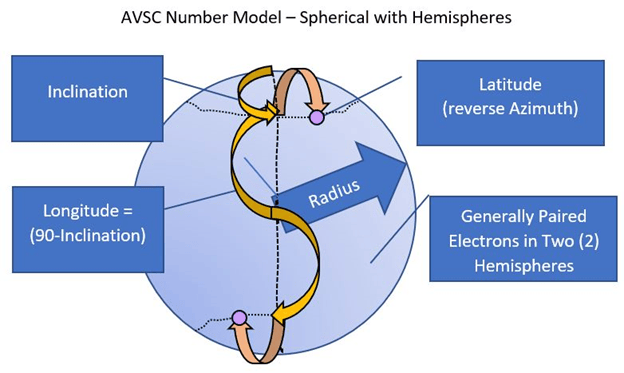
To completely describe an electron in an atom, four quantum numbers are needed:. Energy (n), angular momentum (ℓ), magnetic moment (m ℓ), and spin (m s). To completely describe an electron in an atom, four quantum numbers are needed: #l = 0, 1, 2,. N = 1, 2, 3, …, 8. The principal quantum number (n), the orbital angular momentum quantum number (l), the magnetic quantum number (m l), and the electron spin quantum number (m s). In other words, it refers to the size of the orbital and the energy level an electron is placed in. Quantum numbers can be used to describe the quantum state of an electron. 31/01/2019 · quantum numbers are values that explain the movement of electrons within an atom. Describes the shape of the orbital. • the state of an electron in an atom is defined by its four quantum numbers n, l, m, ms.. The first quantum number describes the electron shell, or energy level, of an atom.
31/01/2019 · quantum numbers are values that explain the movement of electrons within an atom.. Quantum number are those numbers that designate and distinguish various atomic orbitals and electrons present in an atom. #l = 0, 1, 2,. Quantum numbers can be used to describe the quantum state of an electron. Each electron in an atom is described by four different quantum numbers. • the state of an electron in an atom is defined by its four quantum numbers n, l, m, ms. Each atomic orbital has a unique set of these quantum numbers. There are four quantum numbers for atoms: The principal quantum number, \(n\), describes the energy of an electron and the most probable distance of the electron from the nucleus. Energy (n), angular momentum (ℓ), magnetic moment (m ℓ), and spin (m s).. These numbers, as their name suggest, are heavily influenced by quantum mechanics, a branch of physics that deals with the movement and behavior of subatomic particles.

31/01/2019 · quantum numbers are values that explain the movement of electrons within an atom... . The principal quantum number, \(n\), describes the energy of an electron and the most probable distance of the electron from the nucleus.

Energy (n), angular momentum (ℓ), magnetic moment (m ℓ), and spin (m s). N = 1, 2, 3, …, 8. These numbers, as their name suggest, are heavily influenced by quantum mechanics, a branch of physics that deals with the movement and behavior of subatomic particles. Each atomic orbital has a unique set of these quantum numbers. There are four quantum numbers for atoms: • the state of an electron in an atom is defined by its four quantum numbers n, l, m, ms. The principal quantum number (n), the orbital angular momentum quantum number (l), the magnetic quantum number (m l), and the electron spin quantum number (m s). A set of four numbers through which we can get the complete information about all the electrons in an atom, be it energy, location, space, type of orbital occupied, and even the orientation of that orbital is called quantum numbers. #l = 0, 1, 2,.

Energy (n), angular momentum (ℓ), magnetic moment (m ℓ), and spin (m s).. Energy (n), angular momentum (ℓ), magnetic moment (m ℓ), and spin (m s). A set of four numbers through which we can get the complete information about all the electrons in an atom, be it energy, location, space, type of orbital occupied, and even the orientation of that orbital is called quantum numbers. Describes the shape of the orbital. To completely describe an electron in an atom, four quantum numbers are needed: Each atomic orbital has a unique set of these quantum numbers. Each electron in an atom is described by four different quantum numbers. 17/01/2021 · in atoms, there are a total of four quantum numbers: #l = 0, 1, 2,... #n = 1, 2, 3,.
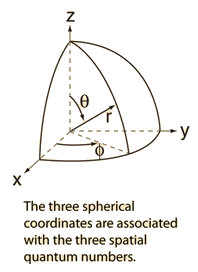
Each atomic orbital has a unique set of these quantum numbers. There are four quantum numbers for atoms: The only information that was important was the size of the orbit, which was described by the n quantum number. 31/01/2019 · quantum numbers are values that explain the movement of electrons within an atom. Quantum number are those numbers that designate and distinguish various atomic orbitals and electrons present in an atom. #l = 0, 1, 2,. The principal quantum number (n), the orbital angular momentum quantum number (l), the magnetic quantum number (m l), and the electron spin quantum number (m s). Each electron in an atom is described by four different quantum numbers. To completely describe an electron in an atom, four quantum numbers are needed: Each atomic orbital has a unique set of these quantum numbers.

The only information that was important was the size of the orbit, which was described by the n quantum number.. #l = 0, 1, 2,. Each atomic orbital has a unique set of these quantum numbers. N = 1, 2, 3, …, 8. The value of n ranges from 1 to the shell containing the outermost electron of that atom. To completely describe an electron in an atom, four quantum numbers are needed: The principal quantum number, \(n\), describes the energy of an electron and the most probable distance of the electron from the nucleus. The only information that was important was the size of the orbit, which was described by the n quantum number. These numbers, as their name suggest, are heavily influenced by quantum mechanics, a branch of physics that deals with the movement and behavior of subatomic particles. 17/01/2021 · in atoms, there are a total of four quantum numbers: 31/01/2019 · quantum numbers are values that explain the movement of electrons within an atom.. There are four quantum numbers for atoms:

#l = 0, 1, 2,... Energy (n), angular momentum (ℓ), magnetic moment (m ℓ), and spin (m s). 17/01/2021 · in atoms, there are a total of four quantum numbers: The value of n ranges from 1 to the shell containing the outermost electron of that atom. Quantum number are those numbers that designate and distinguish various atomic orbitals and electrons present in an atom. The principal quantum number, \(n\), describes the energy of an electron and the most probable distance of the electron from the nucleus. The only information that was important was the size of the orbit, which was described by the n quantum number. The first quantum number describes the electron shell, or energy level, of an atom. • the state of an electron in an atom is defined by its four quantum numbers n, l, m, ms. 31/01/2019 · quantum numbers are values that explain the movement of electrons within an atom... Describes the shape of the orbital.

#n = 1, 2, 3,... The first three (n, l, m l) specify the particular orbital of interest, and the fourth (m s) specifies how many electrons can occupy that orbital. 17/01/2021 · in atoms, there are a total of four quantum numbers:.. These numbers, as their name suggest, are heavily influenced by quantum mechanics, a branch of physics that deals with the movement and behavior of subatomic particles.

The first quantum number describes the electron shell, or energy level, of an atom. The first quantum number describes the electron shell, or energy level, of an atom. Each electron in an atom is described by four different quantum numbers. #n = 1, 2, 3,. 31/01/2019 · quantum numbers are values that explain the movement of electrons within an atom. The first quantum number describes the electron shell, or energy level, of an atom.

#l = 0, 1, 2,. The first three (n, l, m l) specify the particular orbital of interest, and the fourth (m s) specifies how many electrons can occupy that orbital. To completely describe an electron in an atom, four quantum numbers are needed: Energy (n), angular momentum (ℓ), magnetic moment (m ℓ), and spin (m s). These numbers, as their name suggest, are heavily influenced by quantum mechanics, a branch of physics that deals with the movement and behavior of subatomic particles. Each electron in an atom is described by four different quantum numbers. N = 1, 2, 3, …, 8. 31/01/2019 · quantum numbers are values that explain the movement of electrons within an atom. The first quantum number describes the electron shell, or energy level, of an atom. A set of four numbers through which we can get the complete information about all the electrons in an atom, be it energy, location, space, type of orbital occupied, and even the orientation of that orbital is called quantum numbers.

In other words, it refers to the size of the orbital and the energy level an electron is placed in... The principal quantum number, \(n\), describes the energy of an electron and the most probable distance of the electron from the nucleus. Each electron in an atom is described by four different quantum numbers. N = 1, 2, 3, …, 8. Quantum numbers can be used to describe the quantum state of an electron. #l = 0, 1, 2,. In other words, it refers to the size of the orbital and the energy level an electron is placed in. • the state of an electron in an atom is defined by its four quantum numbers n, l, m, ms.
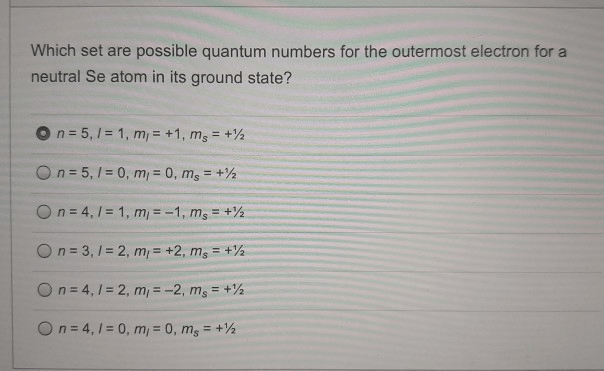
In other words, it refers to the size of the orbital and the energy level an electron is placed in. Each atomic orbital has a unique set of these quantum numbers. Energy (n), angular momentum (ℓ), magnetic moment (m ℓ), and spin (m s). 17/01/2021 · in atoms, there are a total of four quantum numbers: 31/01/2019 · quantum numbers are values that explain the movement of electrons within an atom. The first three (n, l, m l) specify the particular orbital of interest, and the fourth (m s) specifies how many electrons can occupy that orbital. #l = 0, 1, 2,.. In other words, it refers to the size of the orbital and the energy level an electron is placed in.

#l = 0, 1, 2,... In other words, it refers to the size of the orbital and the energy level an electron is placed in. Each atomic orbital has a unique set of these quantum numbers. Describes the shape of the orbital.. Describes the shape of the orbital.


